
Whether you're just starting your trading journey or refining your existing approach, having a repeatable strategy is far more important than chasing the latest indicator or market trend.
Every day, thousands of traders enter the market without a clear plan. They jump into trades because of fear of missing out, social media hype, or a feeling that "this looks like a good opportunity."
Professional traders work differently.
Rather than guessing where the market might go, they rely on structured trading setups with clearly defined entry conditions, risk management rules and exit plans.
In this article, we'll explore what makes a trading strategy effective—and how you can begin building a more disciplined trading process.
What Is a Trading Strategy?
A trading strategy is a predefined set of rules that tells you:
- When to enter a trade
- Where to place your stop loss
- How to manage risk
- When to take profits
- When not to trade
The goal isn't to predict every market move.
The goal is to make consistent, repeatable decisions over hundreds of trades.
Without a strategy, trading often becomes emotional.
With one, every decision has a reason.
Why Most Traders Struggle
One of the biggest misconceptions in trading is believing success comes from finding a "magic indicator."
In reality, many losing trades happen because traders:
- Enter too early
- Chase momentum after a move has already happened
- Risk too much on a single position
- Move their stop loss when the market goes against them
- Have no clear exit plan
A good trading strategy helps remove much of this uncertainty.
Instead of reacting emotionally, you follow predefined rules.
What Professional Traders Look For
While every trader has a different style, many professional traders focus on the same core principles:
Defined Entry Conditions
Rather than guessing, they wait for specific market conditions before entering.
Objective Risk Management
Every trade has a predefined level where the idea is considered invalid.
Consistent Execution
The same process is repeated over many trades instead of constantly switching strategies.
Trade Management
Winning isn't just about finding good entries.
Managing the trade afterwards is equally important.
Three Different Types of Trading Setups
There is no single strategy that works in every market condition.
Instead, experienced traders often use different approaches depending on what the market is doing.
For example:
Trend Reversal Setups
These aim to identify when buying or selling pressure is beginning to fade.
Momentum Confirmation Setups
Rather than predicting reversals, these wait for confirmation before entering.
Opening Session Reversal Setups
Some strategies focus specifically on market behaviour shortly after the opening bell, where emotions and volatility are often highest.
Each of these approaches relies on objective rules—not opinions.
Why Real Examples Matter
Reading about a trading strategy is one thing.
Seeing it applied to a real chart is another.
That's why studying annotated examples can dramatically improve your understanding.
Instead of simply memorising indicators, you learn:
- Why the trade was taken
- What confirmed the setup
- Where risk was defined
- How profits were managed
This helps build pattern recognition that becomes increasingly valuable over time.
Building Better Trading Habits
Successful trading isn't about finding one perfect setup.
It's about building a repeatable process.
That means:
- Waiting patiently for quality opportunities
- Accepting that not every trade will win
- Managing risk consistently
- Following your trading plan
Small improvements in discipline often have a greater long-term impact than constantly searching for new indicators.
Ready to Learn Three Practical Trading Strategies?
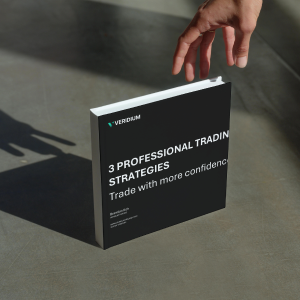
If you'd like to see how these concepts are applied in real markets, we've created a free trading guide that walks through three practical trading strategies using annotated chart examples.
Inside, you'll discover:
- Three structured trading setups
- Real chart examples
- Entry and exit frameworks
- Risk management principles
- Practical insights you can start applying immediately
Whether you're new to trading or looking to refine your existing process, it's designed to help you make more structured trading decisions.
👉 Download the Free Trading Guide
Continue Your Trading Journey with Veridium
At Veridium, we believe becoming a better trader isn't about chasing shortcuts—it's about developing discipline, learning from real examples and applying structured processes consistently.
Beyond the free trading guide, you can also join our educational webinars, connect with other traders in our community and continue developing your skills through practical market discussions.
Start with the guide, build your foundation, and keep learning—one trade at a time.




.png)